
Ceramic vs Porcelain – Which One Should I Choose for My Malaysian Home?
The most common tiles that you’ll find in modern Malaysian homes are ceramic and porcelain.
They are common for a reason. Fancy tiles such as granite are pricier, so they are reserved for specific areas such as kitchen countertops. Meanwhile, traditional materials such as wood are being replaced with alternatives that can mimic the same look, but without all the drawbacks.
What are the differences between ceramic and porcelain? They look the same, and some people use the terms interchangeably. So why is one more expensive than the other?
In this brief guide, we will elaborate on their different characteristics so you can make an informed decision.
What are the differences between ceramic and porcelain?
By category, ceramic and porcelain fall into the same umbrella – the ceramic family.
What distinguishes them when it comes to grading is their water absorption rate.
Porcelain tiles have a water absorption rate of 0.5% or lower, while ceramic tiles absorb more. This is due to their material composition and manufacturing process, which, in return, affects other attributes including:
| Ceramic Tile | Porcelain Tile | |
|---|---|---|
| Construction | Made with coarser clay and fired at a lower temperature | Made with denser clay and fired at a higher temperature |
| Water absorption rate | More than 6% | Less than 0.5% |
| Resistance to moisture | Good | Excellent |
| Resistance to stain | Good | Excellent |
| Durability | Prone to cracking and breaking | Highly durable |
| Design | Limited | Versatile |
| Installation | Easy to cut and install, DIY-friendly | More brittle and may need professional services |
Which tiles should I use for my house?
Ask any tile supplier and they will recommend porcelain tiles right away due to their high quality. Now, being Malaysian, we also want to score the best deal and save as much money as we can!
Thus, remember to take into account all considerations, including:
Appearance
Basic ceramic and porcelain look the same, both with solid colours and patterns.
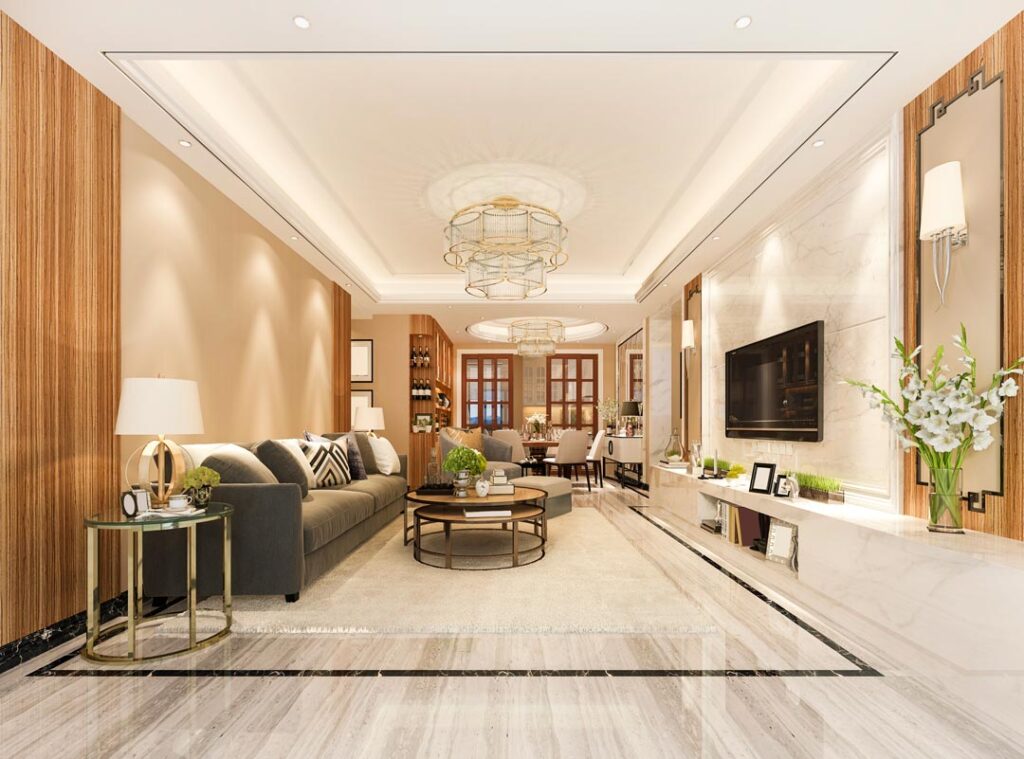
Yet, recent technology has enabled porcelain to mimic the look of other materials. This allows for more aesthetic choices such as a vintage wooden feel or a lavish granite look.
Durability
Generally, porcelain tiles are more durable than ceramic tiles.
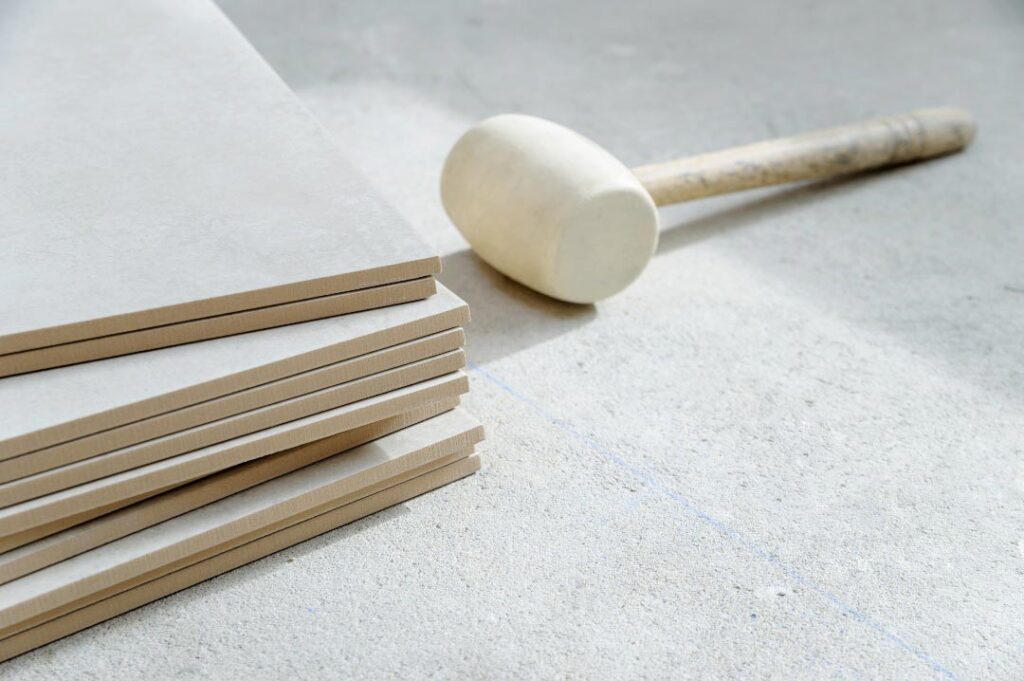
Porcelain tiles are harder, denser, less porous, and more impervious to moisture. They are suitable for outdoor use as well as in damp areas such as the kitchen and the bathroom.
Ceramic tiles are more suitable for indoor use. If you want to use ceramic for the kitchen or bathroom, make sure the tiles are glazed to minimise water infiltration.
Cost
Porcelain tiles are more expensive to buy, and they can also be trickier to install. While ceramic tiles are easier to cut and install by DIY enthusiasts, porcelain tiles can be brittle and better left to the hands of professionals.